The North American Honeybee Expo
Posted on Feb 4, 2026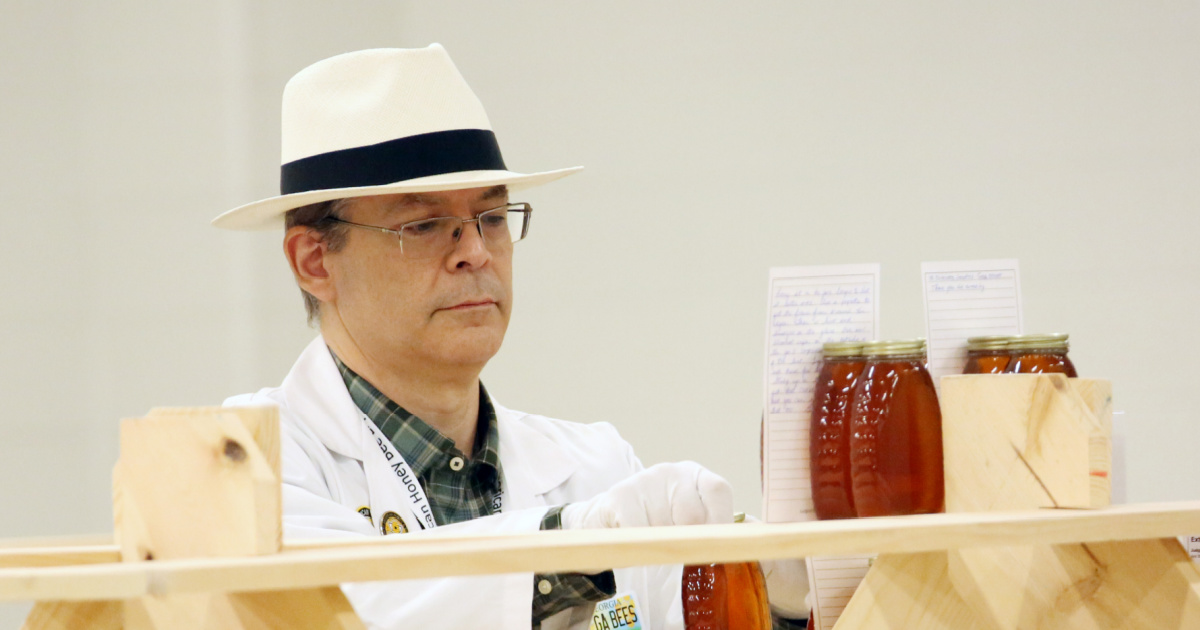 The country’s largest honeybee event brings “family members” together to promote and preserve the industry.
As far as honeybee conferences go, and yes, there are many, they don’t get bigger than the North American Honeybee Expo (NAHBE), recently held at the Kentucky Fair and Expo Center, filling the South Wing from one end to the other.
While attending the 2026 expo, I can honestly say I have never seen anything related to honeybees of this magnitude before.
To get a sense of just how big this event was, it covered 165,000 square feet for the tradeshow with 144 vendors, 1242 exhibits and 298 exhibitors. More than 3,500 attendees came to the three-day expo, which featured more than 200 honeys from around the world available to taste through the events unique honey bar.
Kamon Reynolds and his wife, Laurel, founded the NAHBE, having both been beekeepers since their teens.
“We used to run about 500 hives, and right now, we have around 300, but we just keep shrinking back because this conference takes two people, 365 days, to orchestrate and then a lot of things, industry-wise, beyond that,” he said. “I started at 14 years old, after seeing a couple of observation hives. I tried a couple of types of honey from a local beekeeper, and it was just fascinating.”
That is all it took to set him on his honeybee journey.
“I coerced my parents to drive me to a place and buy five hives of bees,” he said. “I didn't know anything, and I really struggled early on, because I didn't have the right information. That's kind of how all the expo was born.”
During my conversation with Kamon, I began to sense just how important it is to him to help preserve an industry that means so much to so many, not to mention the honeybee population.
 “It took us so many years to get to where we are with our own bees, and looking back, so much of that could have been avoided with proper education,” he said. “So, we started a YouTube channel, and I do a lot of public speaking, and we now put on the expo with the goal of helping people be able to get to a place in maybe three or four years, that took me over 10 years to get to. We just want to help them out.”
A family kind of feeling
Kamon describes the people he knows and who attend the Expo as family, which explains how he greets attendees on the first day of the three-day event.
As I pulled into the Kentucky State Fair and Expo Center that first day, I noticed a long line of people gathered across the entire front of the facility waiting to get in. As the main doors opened, Kamon stepped out and began to say hello, welcome each one, and thank them for attending.
And he didn’t just do that for a few. He stayed outside the doors until the last person entered the building. He often stopped to chat or take selfies with a group, and all of them seemed to know him. When I asked him if he did that at every expo, he said, “Every year.”
“Building relationships is important to me, and a lot of these people are like grandparents and friends to me,” he added. “I go around and speak at conferences, and I've seen them at several shows. We're a small community, but we're real tight-knit. It's really important that I convey how thankful I am for them to be a part of this. “
Kamon said the Expo is more like a family reunion to for him and most of the attendees.
“There are a lot of relationships here that are part of the culture that we're trying to create,” he said. “So, I try to lead by example. I appreciate these folks, and they've come a long way and done a lot to get here. I think the least I could do is give them a few minutes of my time.”
It was at this point in our conversation that I knew how dedicated this guy is to the honeybee industry not just because he’s part of it, but because he has created an event that has helped so many others get involved or stay involved, both from the production side of the industry and for the vendors who provide valuable assistance to beekeepers.
Kamon said that many of the industry vendors are also friends, and he has taken the same philosophy to them as with the beekeepers themselves, searching for ways to help them be successful through building relationships.
“If you help people out, word gets around, and we’ve built our reputation by helping people, and that's still the goal,” he said.
A Kentucky flavor to the NAHBE
With the biggest honeybee expo in the world being held in Louisville, it’s no surprise that many beekeepers, bee enthusiasts, and industry vendors from Kentucky have made NAHBE a regular event on their schedules. Oaks and Kellie Routt of Grandview Farm in Hodgenville were making their third trip to the expo and have found it to be very beneficial to their “Bees, Blooms, and Elderberries” business.
“This show is certainly the biggest and the best and specifically great for folks who are just entry-level beekeepers learning beekeeping, all the way up to those who run around a hundred honeybee colonies and receive a nice income off of it,” Oakes said.
He added that this particular event has been very important to their family farm business for a number of reasons.
“Number one, from a personal standpoint, it provides us with income in a typical month (January) where cashflow is very low, but it also allows us to educate folks about elderberry, the health benefits of it, also how it can benefit honeybees and be a pollen source provider during a time of year when there's typically low pollen production being around mid-June.”
Oaks also pointed out that having the NAHBE in this state gives people a good snapshot of what’s going on in Kentucky from a small farming aspect.
“A lot of people know us for horses, bourbon, but we also have the largest beef cattle numbers east of the Mississippi, and we’re an incredible honey-producing state, not necessarily from a quantity standpoint, but from a quality standpoint due to all the different flora that we have and the different range of pollens. Kentucky honey is some of the best tasting honey that you can find,” he said.
Facing challenges, looking to the future
Oakes likens beekeeping to any other type of farming, noting that some people want to know how similar it is to the rest of the agricultural realm.
“It's exactly the same,” he said. “We start in August trying to prepare our colonies for the next year, and while we can do everything perfectly, when it comes to April, May, June, July, those real honey production seasons, our biggest variable is if the weather has cooperated, which controls our yield, and we have zero control over it.”
Kamon said the demand for local honey is very high, but beekeepers are struggling right now.
“With all the imports that we get now from all over the world, and there are new pests that are coming into our country,” he said. “One of them by themselves isn't so bad, but over the last several decades, we keep bringing in more stressors to these honeybees, and we're also getting rid of a lot of their natural forage.”
Much of that forage, and what some people refer to as “weeds,” serves as a source of pollen for the honeybees as well as native bees.
“They’re not like cows, where they can feed off of what naturally grows on the ground,” Kamon said. “Honeybees have a great need for nectar and pollens and diverse pollens. And the more we take away these weeds that a lot of people don't find ideal, the harder it is not only for honey bees, but also native bees and other pollinators.”
I could tell, during the course of our conversation, that Kamon takes being an advocate for the honeybee industry very seriously and is doing all he can to protect the bees and the beekeepers for the future.
One of my biggest concerns is that honeybees are overlooked,” he said. “They have an important purpose in providing healthy food and pollinating many crops. This is very personal to me. These people are like family, and a lot of them have no way of protecting themselves and the bees they love.”
Kamon said he would soon be reaching out to the USDA to try and get the ball rolling on measures to help protect the industry, not only for those in the business but for a new generation.
“We have a ‘Next Gen’ program working with teens, many of whom already have hives and want to be professional beekeepers,” he said. “They're the future, and we owe them something to look forward to when they get to be my age and older.”
I came away from the expo with a knowledge of honeybees I did not have before and a sense of duty to tell their stories more often. For more information, visit the NAHBE website at www.nahbexpo.com.