Candid Conversation | Ray Bowman
Posted on Feb 4, 2026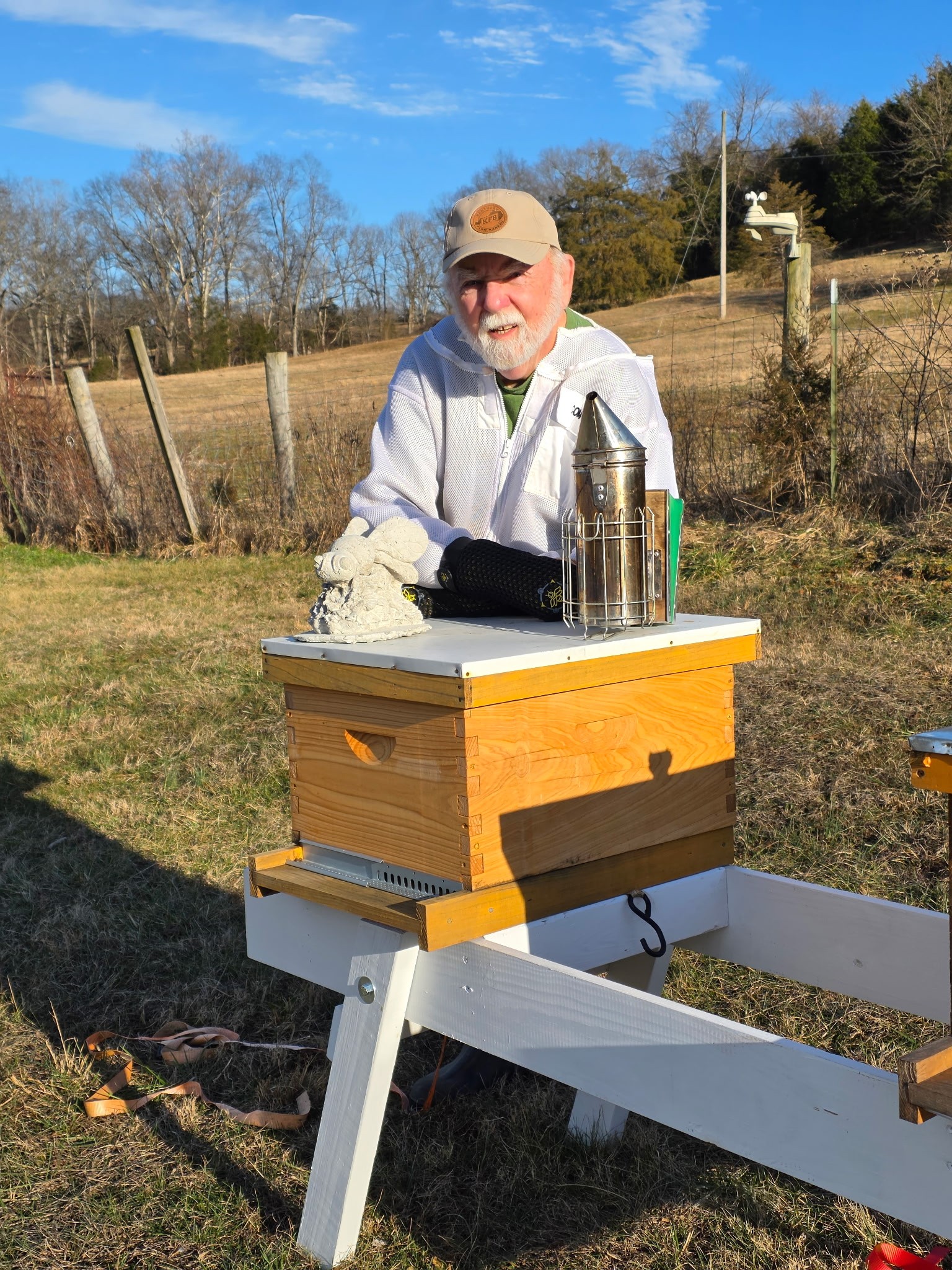
Candid Conversation presents a question-and-answer discussion about the topical issues related to Kentucky Farm Bureau (KFB) priorities, the agricultural industry, and rural communities. In this edition, the newest director of the Kentucky State Beekeepers Association (KSBA) and the President of the Franklin County Farm Bureau Ray Bowman discusses the importance of honeybees and some of the initiatives the organization undertakes to support state beekeepers and keep the public informed. The following are excerpts of a “Let’s Get Rural” podcast featuring Bowman and KFB News Editor Tim Thornberry.
KFB: Would you share a little about yourself and the KSBA?
RB: I'm currently the president of Franklin County Farm Bureau, so I have a connection with the organization and love it dearly. I have a cattle farm and about 10 bee hives, and recently, I was appointed for a year as a director for KSBA to fill a position that opened after an election. That organization itself is state-functioning and works with the many local beekeeper organizations across the state, all of which have access to KSBA. We work together very closely with beekeepers to protect their interests and to promote beekeeping in Kentucky.
KFB: In addition to working directly with state beekeepers, is advocacy and information a big part of what KSBA does?
RB: We are advocates and provide information, and as a lifelong learner, I appreciate the information trying to make that available because there’s a lot of hyperbole when it comes to honeybees. While they are critical for pollination of many crops such as almonds, apples, cantaloupes, and watermelons, native pollinators also play an important role, and civilization does not solely depend on honeybees. Before the Europeans brought them to this land, native Americans depended on the native pollinators to raise their crops.
KFB: Aren’t there many different types of bees and pollinators in the state?
RB: Yes, some of those include mason bees, carpenter bees, leaf-cutter bees, and bumblebees. Butterflies, wasps, and hornets are also considered pollinators. It’s important to maintain pollinator-friendly habitats for all of these. You can allow clovers and dandelions to grow in lawns or create pollinator gardens. Some highway areas are designated as pollinator habitats to support these species by providing wildflowers and reducing mowing costs.
KFB: Do you think many people are afraid of any kind of bee, thinking they will all sting them if they get too close?
RB: Bees can sting, that’s their principal defense, and if you make them angry, they will sting. But the chances of them stinging are very low. I'm not going to say it's impossible, but they're very low. They're not particularly aggressive. If you leave them alone, chances are, nothing's going to happen, especially with just honeybees and bumblebees, which are absolutely not aggressive. There's really not much of a reason to fear them. Respect them, but don’t fear them. They're also protective, and they want to make sure that anything that is close to their hive is not going to try to interfere with their work. They want to make sure that their turf, if you will, is protected.
KFB: What about the beekeepers themselves? What do you tell people who may be getting into beekeeping about how to properly handle them?
RB: You’ll see some beekeepers on social media these days, and it's a big deal to some of them to work the bees without protective equipment. We don't advise that. That's not a very wise approach, especially if you're not just really good at it. But it is possible to work with the bees without protective equipment, if you're very gentle, if you're very slow. If you don't demonstrate any fear to them or present any threat to them, there's very little chance of them being a problem. But at the same time, if you're out in a field of wildflowers, or clover, or something like that, and there are lots of bees around. You can be careful around them, but you shouldn't be worried about them.
KFB: As with any production farm, there is an end product, honey being what is produced by the honeybees. Have you seen a lot of growth in the local honey business over the years, especially at farmers’ markets?
RB: Yes, very much so, and the farmers’ markets are good places to pick up local honey, where you can usually buy it directly from the producer, or from an organization that is representing the producer. I'm also a member of the Capital City Beekeepers, many of whom go to the Frankfort Farmer's Market many times a year, selling honey that is produced locally. We wouldn't sell anything else, because that's who we are.
There are local organizations all over the state that are doing the same thing, and there are numerous local beekeeping organizations that are a source for local beekeepers to interact with, to learn from, to grow, to ask questions, and to develop new strategies.
The KSBA runs a certified Kentucky honey program to verify that honey labeled as local truly originates from Kentucky producers, helping consumers avoid mislabeled honey. Also, honeybees are overachievers, and they make far more honey than they ever really need, which some people don't understand how it works. They may get a little upset thinking we are stealing honey from the bees. But it's more of a harvest than anything else, so we can kind of share it with them. We just have to make sure that we leave enough in the hives for them to survive the winter.
KFB: With the State General Assembly in session, is there anything the KSBA will be looking for from a legislative perspective?
RB: One of the things that we're currently working on is trying to get a sales tax exemption on equipment for beekeepers. It’s been attempted before, a few times, but it's failed. But hopefully this time, people will understand the importance of it, and how much this would be an encouragement to people to expand their operations, perhaps, or to get into it.
The sales tax does not have a huge impact on the state. The Legislative Research Commission has done economic impact statements on it, and it looks like it might have a $200,00 to $300,000 impact on the state's revenue. But if you take that and figure out the amount of positive impact that it could have on the beekeeping community, and on people selling the equipment and so forth, I think it's kind of a wash. And I think it would be a tremendous opportunity for beekeepers.
Because, as you know, livestock producers... I'm a cow guy, too. I raise cattle. I don't have to pay sales tax on the cattle feed or the equipment that I use to raise my cattle. When I raised sheep and goats, I didn't have to pay sales tax on those kinds of things, either. So why should honeybees be any different?